
Inside My Studio: Why I Record on a Neumann U87

Professional German IVR Voice Over: First Impressions Start on the Phone
23/05/2026
Fast Turnaround German Voice Over: How Speed Without Sacrifice Works
06/06/2026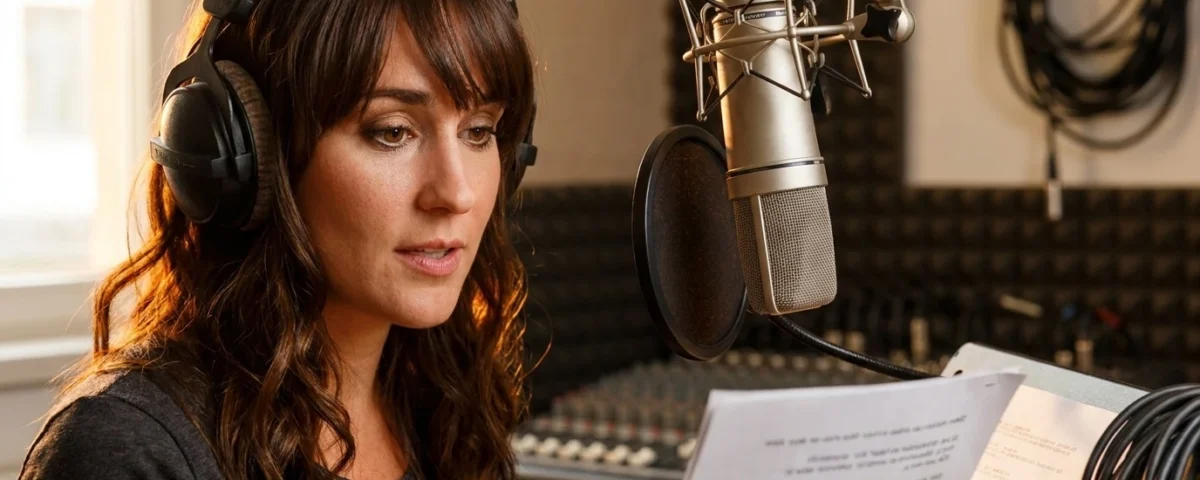
Clients often ask me what goes into producing the audio they receive. The truth is that a great voice over recording depends on far more than a good voice. It requires the right equipment, a carefully treated space, and a refined workflow that has been developed over years of professional work. In this post, I invite you behind the scenes of my Berlin recording studio to show you exactly how your projects come to life. If you would like to hear the results, listen to my German voice over samples.
The Heart of the Setup: Microphone and Signal Chain
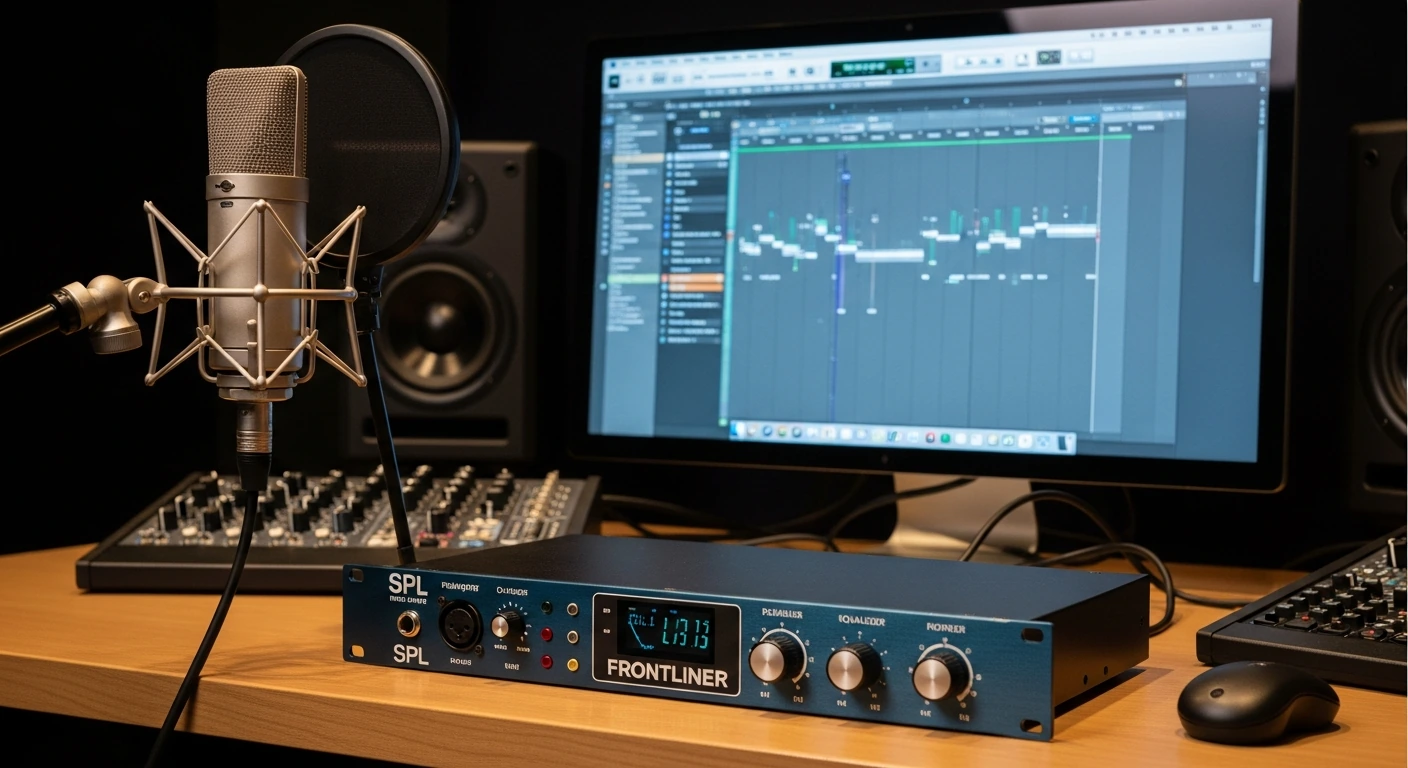
Every recording begins with the microphone, and the microphone I trust for virtually all of my work is the Neumann U87. It is one of the most respected studio microphones in the world, found in broadcast studios and recording facilities everywhere. Its warm, detailed sound captures the natural character of the human voice with remarkable fidelity.
The microphone feeds into an SPL Frontliner channel strip, which handles preamplification, EQ, and compression in a single high-quality unit. This combination gives me a clean, broadcast-ready signal before the audio even reaches the computer. The result is a recording that requires minimal post-processing and sounds polished from the start.
Why Equipment Matters
You might wonder whether equipment really makes that much difference. The answer is a definitive yes. A professional microphone captures detail and nuance that consumer-grade equipment simply cannot reproduce. The subtle warmth of a voice, the natural breath sounds, the clarity of consonants in German, all of these are shaped by the quality of the recording chain.
This is one of the key reasons that professional German voice over matters for your brand. You are not just paying for a voice; you are paying for the technology and expertise behind that voice.
Full Equipment Overview
| Component | Equipment | Purpose |
|---|---|---|
| Microphone | Neumann U87 | Primary recording microphone for all voice work |
| Channel Strip | SPL Frontliner | Preamplification, EQ, and compression |
| Audio Interface | Professional USB/Thunderbolt interface | Analogue-to-digital conversion |
| DAW | Pro Tools | Recording, editing, and processing |
| Monitoring | Studio reference headphones and monitors | Accurate audio playback during recording and editing |
| Connectivity | Source-Connect, Zoom, phone patch | Live remote direction from anywhere in the world |
The Recording Space
A microphone can only sound as good as the room it sits in. Even the finest studio microphone will deliver poor results in an untreated space with echoes, outside noise, or resonance problems. My studio has been specifically designed and treated for voice recording, creating a controlled acoustic environment that eliminates unwanted sound.
The recording booth is isolated from external noise. Berlin is a vibrant city, and traffic, construction, and neighbourhood sounds must all be kept out of the recording. Multiple layers of isolation ensure that the only thing the microphone captures is my voice.
Acoustic Treatment and Room Design
Inside the booth, acoustic treatment panels absorb reflections and prevent the “boxy” or echoey sound that plagues many home setups. The treatment is carefully balanced. Too much absorption makes a room sound unnaturally dead, while too little leaves audible reflections. The goal is a neutral, clean sound that works for any type of project, from intimate narration to energetic commercial reads.
Key elements of my acoustic treatment include:
- Broadband absorbers on walls and ceiling to control mid and high-frequency reflections
- Bass traps in corners to manage low-frequency buildup
- Isolation from structure-borne sound through decoupled walls and flooring
- Sealed door and window systems to block airborne noise from outside
- Ventilation designed for silence so air circulation does not introduce noise
This level of treatment is what separates a professional studio from a home recording setup. It is an investment that directly benefits every client, because the audio quality is consistent regardless of what is happening outside the studio walls.
What Makes a Professional Studio Different from a Home Setup
The rise of affordable recording equipment has made it possible for almost anyone to set up a microphone and start recording. But there is a significant gap between a home setup and a purpose-built professional studio. Here is where the differences become clear:
- Room acoustics: A professional studio is acoustically treated to eliminate reflections and external noise. A bedroom or home office is not.
- Equipment quality: Professional microphones, preamps, and converters capture audio at a level that consumer equipment cannot match.
- Monitoring accuracy: Studio monitors and calibrated headphones reveal problems that laptop speakers or consumer headphones miss entirely.
- Consistency: A professional studio delivers the same quality on every recording, regardless of the time of day, weather, or neighbourhood activity.
- Redundancy: Backup systems mean that a hardware failure does not derail your project or your deadline.
When you hire a voice over artist, understanding their studio setup tells you a lot about the quality you can expect. You can learn more about my background and the standards I work to on my About page.
Digital Audio Workstation and Processing
I use Pro Tools as my Digital Audio Workstation. It is the industry standard in professional audio production, used by recording studios, post-production houses, and broadcast facilities around the world. Pro Tools provides the precision editing and processing tools I need to deliver polished audio for every project.
After recording, each file goes through a processing chain that typically includes noise reduction, EQ adjustment, compression, and normalisation. The goal is audio that sounds natural and clear, with consistent volume and no distracting artefacts. My approach to processing is transparent. I enhance the natural voice rather than masking it with heavy effects.
Backup Systems and Redundancy
Deadlines matter, and equipment can fail at the worst possible moment. That is why I maintain backup systems for every critical component of my studio. Recordings are saved to multiple drives simultaneously, and I keep backup microphones and audio interfaces ready to go at all times.
This redundancy means that even in the unlikely event of a hardware failure, your project stays on track. It is a detail that most clients never need to think about, but it provides essential peace of mind for projects with tight turnaround times. You can check my availability to plan your project in advance.
A Typical Recording Session
Understanding the recording workflow helps you know what to expect when you commission a voice over project. Here is a step-by-step walkthrough of how a typical session unfolds in my studio:
- Script review: I read through the script carefully, noting pronunciation, pacing, and any questions about intent or emphasis.
- Client briefing: We discuss the desired tone, style, target audience, and any specific direction. This can happen via email, phone, or live session.
- Studio setup: I configure the microphone position, gain levels, and monitoring for the specific project type.
- Recording: I record the script, typically doing two or three complete takes to provide options and ensure the best possible performance.
- Self-direction and review: Between takes, I listen back critically to check pacing, emphasis, and technical quality.
- Editing: I select the best takes, remove any errors or unwanted sounds, and assemble the final audio.
- Processing: EQ, compression, and normalisation are applied to achieve a polished, broadcast-ready sound.
- Quality check: A final listen on both monitors and headphones ensures consistency and catches any remaining issues.
- Delivery: The finished audio is exported in the agreed format and delivered via secure file transfer, typically the same day.
This entire process is designed for efficiency without compromising quality. Most projects, from corporate narration to commercial reads, follow this same proven workflow. For advice on preparing your script for a smooth session, see my guide on how to write a great voice over script.
Remote Sessions and Live Direction
One of the advantages of a modern studio is the ability to connect with clients anywhere in the world in real time. Using Source-Connect, Zoom, or a simple phone patch, producers and creative directors can listen to the recording as it happens and provide direction on the spot.
Live-directed sessions are popular for commercials and projects where the tone needs to be fine-tuned in real time. You hear every take as it is recorded and can request adjustments immediately. It is the closest thing to being in the studio without the travel.
For clients who prefer not to attend the session, I am equally comfortable working from a written brief. Many of my long-standing clients trust me to interpret their scripts independently, and I always deliver options so they can choose the take that works best. Read what my clients say about the experience of working with me.
File Delivery Formats
Different projects require different file formats. I deliver audio in whatever format your production workflow requires. The most common options include:
| Format | Use Case | Quality |
|---|---|---|
| WAV (48 kHz / 24-bit) | Broadcast, post-production, archiving | Uncompressed, highest quality |
| WAV (44.1 kHz / 16-bit) | General production, e-learning | CD quality, uncompressed |
| MP3 (320 kbps) | Web, podcasts, review copies | High-quality compressed |
| AIFF | Apple-based production workflows | Uncompressed, equivalent to WAV |
| Telephony formats | IVR and phone systems | Optimised for phone playback |
If you are unsure which format you need, I am happy to advise. In most cases, I deliver a high-resolution WAV file as the master along with any additional formats you specify. This gives you maximum flexibility for future use.
What Clients Can Expect
When you work with me, you can expect a professional, straightforward process from start to finish. Clear communication, fast turnaround, and audio that meets broadcast standards every time. Whether your project is a single 30-second commercial or a multi-hour e-learning course, the same care and attention goes into every recording.
I work with production companies, agencies, corporate communications teams, and independent producers around the world. Understanding what to look for when hiring a German voice over artist can help you make the right choice for your project.
The Final Product
Everything in my studio, from the Neumann U87 to the acoustic treatment to the Pro Tools workflow, exists to serve one purpose: delivering audio that makes your project sound its best. The technology and the space are tools that support the performance, ensuring that the voice your audience hears is clear, natural, and engaging.
I am proud of the studio I have built and the results it produces. If you would like to hear for yourself, listen to my German voice over samples. And if you are ready to discuss your next project, request a free quote or get in touch. I would love to put this studio to work for you.
