
Professional Voice Over vs. AI Voice: What Each Does Well in 2026

German Voice Over for Online Video: What Works in 2026
13/06/2026
How Much Does German Voice Over Cost? A Pricing Guide
27/06/2026
AI-generated voices have improved dramatically in recent years. What once sounded robotic and lifeless now passes for human in short clips and simple applications. But passing for human and actually connecting with an audience are two very different things. When it comes to professional voice over vs AI, the differences go far deeper than sound quality — they touch on emotion, trust, brand identity, and the kind of impact that only a real human voice can deliver.
As a professional German voice over artist who has been working in this industry for years, I have watched AI voice technology evolve with great interest. I am not here to dismiss it entirely — it has its uses. But I want to give you an honest, informed perspective on what AI voice can and cannot do, so you can make the right choice for your project. And if you decide a human voice is what your project needs, request a free quote and let us get started.
The Rise of AI Voice Technology
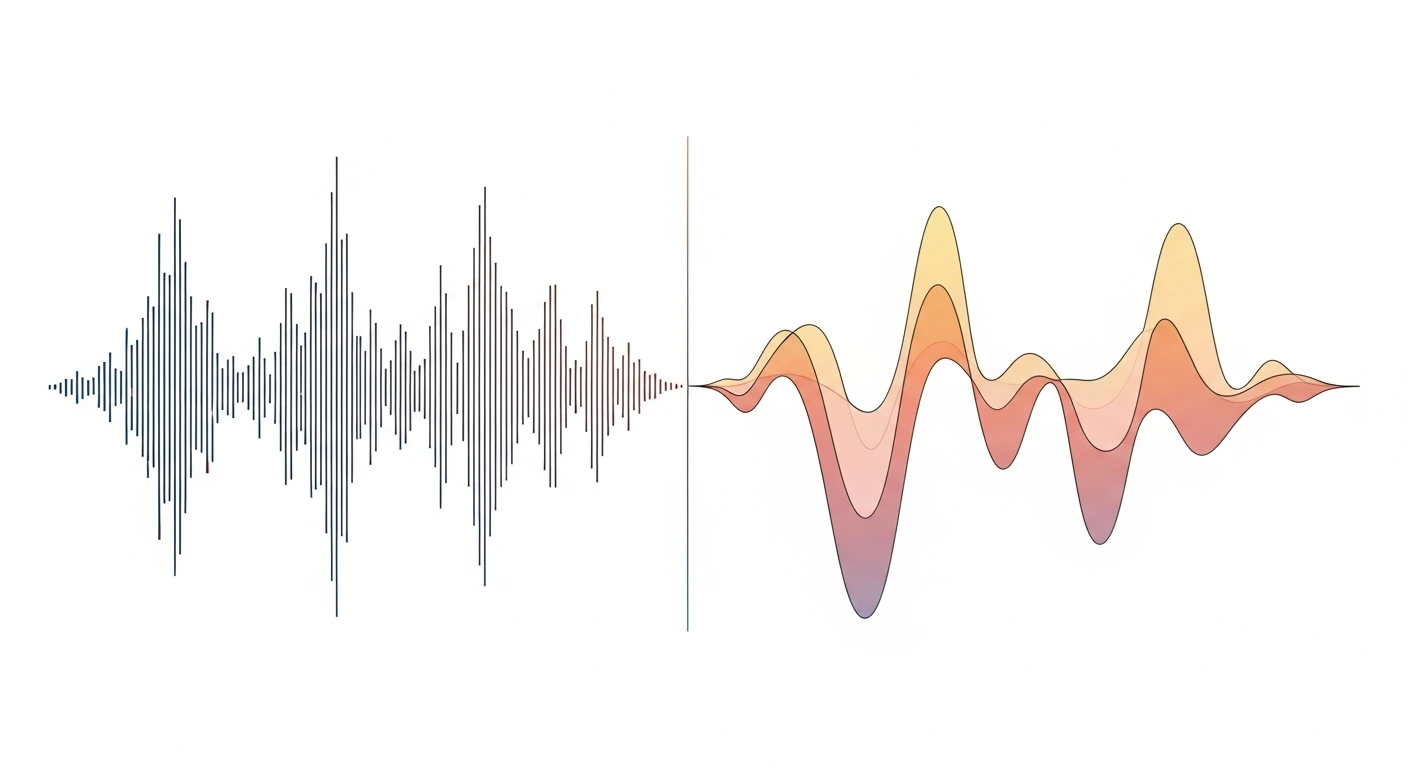
AI voice synthesis has made remarkable progress. Modern text-to-speech systems use deep learning models trained on thousands of hours of recorded speech to generate audio that sounds increasingly natural. Companies like Google, Amazon, and Microsoft offer AI voice tools that can produce spoken audio from text in seconds.
For businesses, the appeal is obvious: AI voice is fast, inexpensive, and scalable. Need a hundred variations of a phone prompt? AI can generate them in minutes. This speed and cost efficiency has made AI voice a legitimate tool for certain applications.
Why the Hype Is Understandable
AI voices can now handle multiple languages, adjust speaking pace, and even mimic certain emotional tones. For anyone who remembers the mechanical text-to-speech of the early 2000s, the improvement is staggering. It is no surprise that businesses are asking whether AI can replace professional voice over entirely.
The short answer is no. And here is why.
What AI Voice Gets Right
Before I explain where AI falls short, let me be fair about what it does well. Acknowledging AI’s strengths makes the case for professional voice over even stronger, because it highlights exactly where the human advantage lies.
- Speed of generation — AI can produce audio from text almost instantly, which is useful for prototyping and internal drafts.
- Cost for bulk content — For massive volumes of low-stakes audio, such as internal testing or placeholder tracks, AI is inexpensive.
- Consistency of basic delivery — AI does not have bad days. It delivers the same neutral tone every time, which can be useful for standardized content.
- Availability — AI does not need to book studio time or work around schedules. It is available 24/7.
- Multilingual capability — Some AI systems can generate speech in dozens of languages from a single interface.
These are genuine advantages for specific use cases. But they come with significant limitations that become apparent the moment you need your voice over to actually do something meaningful.
Where AI Falls Short
The limitations of AI voice become clear when you move beyond simple, utilitarian audio and into content that needs to persuade, engage, inform, or represent a brand. This is where the gap between professional voice over vs AI becomes impossible to ignore.
Emotional Range and Nuance
Human communication is extraordinarily nuanced. A skilled voice over artist can convey warmth, authority, excitement, empathy, and urgency — often within the same script. We adjust our delivery instinctively based on context, subtext, and the emotional arc of the content.
AI cannot do this. It can approximate a cheerful tone or a serious tone, but it cannot navigate the subtle emotional shifts that make a narration feel alive. It cannot pause for emphasis naturally or soften a word to convey compassion. These micro-decisions happen thousands of times in a single recording, and they are what separate a voice over that moves people from one that merely reads words aloud.
The Uncanny Valley of AI Voice
There is a phenomenon in robotics and animation called the uncanny valley — the unsettling feeling people get when something looks almost human but not quite. AI voice has its own version of this. Modern AI voices sound close to human, but most listeners sense that something is off, even if they cannot articulate exactly what.
This subtle wrongness creates a barrier to trust. When a viewer or listener feels — even subconsciously — that a voice is artificial, their guard goes up. They become less receptive to the message, less likely to engage, and less likely to take action. For brand-critical content, this is a significant risk.
The Human Element in Voice Over
What makes a human voice over truly irreplaceable is not just technical skill — it is the entire human experience behind the voice. When I record a voice over, I bring my understanding of language, culture, emotion, and communication to every line. I interpret the script, make creative choices, and adapt in real time based on what the content needs.
Direction and Collaboration
One of the most valuable aspects of working with a professional voice over artist is the collaborative process. Directors and producers can give feedback during the recording session: a little warmer here, more energy there, try a different emphasis on this word. This real-time creative dialogue produces results that no AI system can match.
When you hire a professional German voice over artist, you are not just buying audio — you are gaining a creative partner who actively contributes to your project’s success. That partnership is something AI simply cannot replicate.
Brand Consistency Over Time
Your brand voice is one of your most valuable assets. It is how customers recognize you, trust you, and connect with you across every touchpoint. A professional voice over artist becomes the voice of your brand — consistent, recognizable, and deeply associated with your identity.
AI voices, by contrast, are generic. They are available to anyone, which means your competitor could be using the same voice. They also change as the technology updates, so the voice your audience associates with your brand today might sound different after the next software update. With a human voice over artist, you get a unique brand voice that belongs to your content alone.
Professional Voice Over vs AI: A Detailed Comparison
To help you evaluate which approach is right for your project, here is a comprehensive comparison across the dimensions that matter most.
| Dimension | Professional Voice Over | AI-Generated Voice |
|---|---|---|
| Emotional depth | Full range of human emotion, nuance, and subtlety | Basic emotional approximation, limited nuance |
| Pronunciation accuracy | Native-level accuracy, including regional and cultural awareness | Generally acceptable but struggles with names, brands, and context-dependent words |
| Brand uniqueness | Unique voice exclusively associated with your brand | Generic voice available to all users of the platform |
| Creative direction | Real-time collaboration, adjustments on the fly | Limited to parameter adjustments and text markup |
| Turnaround time | Hours to days depending on project scope | Seconds to minutes |
| Cost per project | Higher per project but delivers premium quality | Lower per project but quality limitations apply |
| Audience trust | High — listeners connect with authentic human voices | Lower — uncanny valley effect can reduce trust |
| Consistency | Consistent through ongoing relationship with artist | Consistent in basic delivery but changes with software updates |
| Legal clarity | Clear rights and usage agreements | Evolving and uncertain legal landscape |
| Cultural adaptation | Deep cultural understanding, idiomatic delivery | Literal delivery without cultural awareness |
For a detailed look at what professional voice over costs and how projects are typically priced, read my guide on German voice over rates and what to expect.
Legal and Ethical Considerations
The legal landscape around AI voice is still developing, and it raises important questions that businesses need to consider carefully.
Rights and Licensing
When you commission a professional voice over, the usage rights are clearly defined in a license agreement. You know exactly what you are paying for and how you can use the recordings. With AI voice, the licensing terms vary widely between providers. Some platforms retain rights to the generated audio. Others restrict commercial use in ways that may not be obvious.
There are also emerging legal questions about AI voices trained on recordings of real voice artists without consent. Several lawsuits are challenging this practice, and the outcomes could affect AI voice services significantly.
Ethical Transparency
Audiences are increasingly aware of and sensitive to AI-generated content. Using an AI voice without disclosing it can damage trust if audiences discover it. Some jurisdictions are beginning to require disclosure of AI-generated content in advertising and media. Choosing a professional human voice over avoids these concerns entirely.
When AI Makes Sense — And When It Does Not
I believe in being practical and honest. There are situations where AI voice is a reasonable choice, and situations where it absolutely is not.
When to Choose Professional Voice Over
- Brand-facing content — Commercials, brand videos, and marketing campaigns where your reputation is on the line.
- Emotional or narrative content — Documentaries, storytelling, and any content that relies on emotional connection.
- Customer-facing audio — IVR systems and phone greetings where callers form impressions of your company.
- E-learning and training — Educational content where engagement and retention matter.
- Localized content — Any content being localized or dubbed for German-speaking audiences, where cultural nuance is critical.
- Premium online content — YouTube videos, podcasts, and social media content where quality differentiates you from competitors.
- Long-term brand voice — Any project where consistency and brand recognition over time are important.
When AI Might Be Acceptable
AI voice can be reasonable for internal prototyping, placeholder audio during production, or automated system notifications with minimal brand impact. Even in these cases, consider whether the cost savings are worth the quality trade-off.
Real-World Failures of AI Voice
The shortcomings of AI voice show up in real projects every day. Mispronounced brand names in commercials. Awkward pacing in e-learning that causes learners to disengage. Flat delivery in customer service systems that frustrates callers. AI voices that stress the wrong syllable in a compound German noun or cannot distinguish context-dependent pronunciation.
These failures accumulate. Each one chips away at the professionalism and credibility of your content. A professional voice over artist catches and corrects these issues instinctively. You can listen to my German voice over samples to hear the difference that professional delivery makes.
The Future Is Human
AI voice technology will continue to improve. The gap in raw sound quality will likely narrow further. But the fundamental advantage of professional voice over — genuine human connection — is not a gap that technology can close. It is not a technical problem to be solved. It is the essence of what makes voice over powerful in the first place.
When someone hears a human voice, they respond to it as a communication from another person. That response — trust, empathy, attention — is hardwired into us. No algorithm can trigger it authentically, because audiences sense the difference between a voice that is communicating and one that is merely producing sound.
Investing in Quality
Choosing professional voice over is an investment in your brand, your audience, and the impact of your message. It costs more than AI, yes. But the return — in engagement, trust, conversion, and brand perception — is incomparably greater. As I often tell my clients, your voice is not the place to cut corners.
For more perspective on making the right investment, read my articles on how much German voice over costs and what to look for when hiring a German voice over artist.
Professional voice over vs AI is not really a competition. It is a choice between a tool and a craft, between output and communication, between sound and meaning. If your content matters — and it does — choose the human voice.
I would love to help you bring your project to life with authentic, professional German voice over. Listen to my samples, read what my clients say, and when you are ready, request a free quote or get in touch. Let us create something that truly connects.
